
Electrical safety in your business
Protect your people, property and equipment
Electricity powers every part of your business — from lighting and HVAC systems to security, machinery and devices. But if not managed properly, it can also pose serious risks. Learn how to spot hazards, use safety devices effectively and protect your workplace.


Common electrical hazards in commercial settings
Identify and address the following safety hazards to prevent downtime, injury or fire:
- Overloaded circuits: Breakers that trip often may signal too many devices on one circuit. Avoid connecting multiple power bars together.
- Frayed or damaged cords: Regularly inspect extension cords, tools and machines for signs of wear or damage. Replace anything damaged immediately.
- Extension cords: Never use extension cords as a substitute for proper wiring. Keep them away from walkways and high-traffic areas.
- Unsecured or blocked panels: Electrical panels must be easily accessible and kept closed to prevent unauthorized access or arc flash hazards.
- Moisture near outlets or equipment: Water and electricity are a dangerous combination. Ensure ground fault circuit interrupters (GFCIs) are installed in janitorial, kitchen and utility areas.
- Flickering lights or buzzing: This indicates loose wiring or overloaded circuits. Contact a licensed electrical contractor immediately.
Electrical safety devices every business should have
To protect people and property, make sure these devices are installed and maintained:


Commercial surge protectors
These help prevent voltage spikes from damaging sensitive equipment like point-of-sale systems, computers and servers.


Ground fault circuit interrupters (GFCIs):
These outlets are required in areas where water and electricity may meet, like washrooms, kitchens and outdoors.

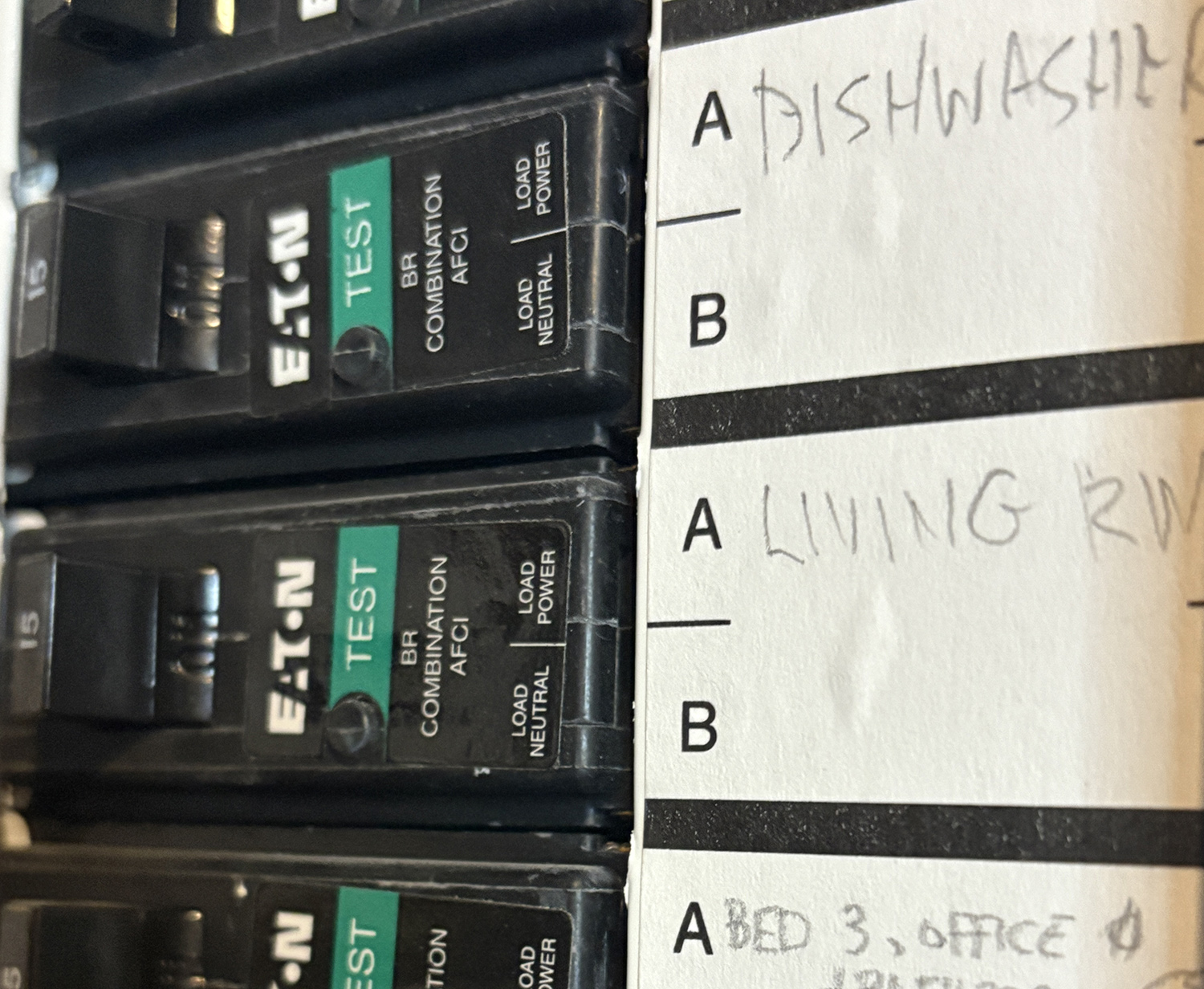
Arc fault circuit interrupters (AFCIs)
These detect electrical arcs and shut off power to prevent fires. They are often required for branch circuits.

Emergency lighting and exit signs
These must function during outages and meet local fire code requirements. Test batteries regularly.


Clearly labeled breaker panels
These help with quick, safe shut-offs in emergencies or during scheduled maintenance.
Tip: All safety devices should be installed or inspected by a licensed electrical contractor and tested regularly.
Responsibilities for business owners, operators and property managers
Ensuring electrical safety is a shared responsibility. Do your part by:
- Keeping electrical rooms clear and accessible at all times
- Maintaining safe working areas around panels, transformers and meters
- Ensuring your team or building staff follow lockout/tagout procedures when working on energized equipment
- Scheduling regular inspections by a licensed electrical contractor
- Contacting us before expanding, relocating or upgrading your service
Reminder: Never attempt electrical work without proper licensing. It’s dangerous, and it’s illegal in Ontario.
Flooding and electrical systems
Floodwater can reach outlets, panels or equipment, creating an immediate electrocution hazard.
If water is encroaching on your electrical system:
- Call us at (613) 738-6400 to request a disconnection.
- Do not enter any flooded electrical or mechanical room.
- Contact a licensed electrical contractor to assess and repair damage.
- Once repairs are complete, the licensed electrical contractor must schedule an Electrical Safety Authority (ESA) inspection.
- We will restore power only after ESA approval is received.

Farms and stray voltage
Stray voltage is low-level electrical current that can occur between surfaces and the earth. People rarely feel stray voltage, but it can affect livestock.
To learn more about stray voltage, including how we investigate it, visit our farms page.
You can also find more information on our FAQs page.
Have more questions?
Electrical Safety Authority (ESA)
FAQs
Visit our FAQs page
Contact us
Contact us for assistance