
Building stronger: Hydro Ottawa's commitment to grid resilience
February 17, 2026
For more than 100 years, we have been powering the homes and businesses across the communities we serve. We know that when customers flip a light switch, they are counting on our ability to deliver safe, reliable electricity.
From sideways rain and heavy snow to the heat of an Ottawa summer, our team works 24/7 to provide the power you rely on, when and where you need it. Our focus on reliability delivered exceptional results in 2025, with customers having power 99.97 per cent of the time.

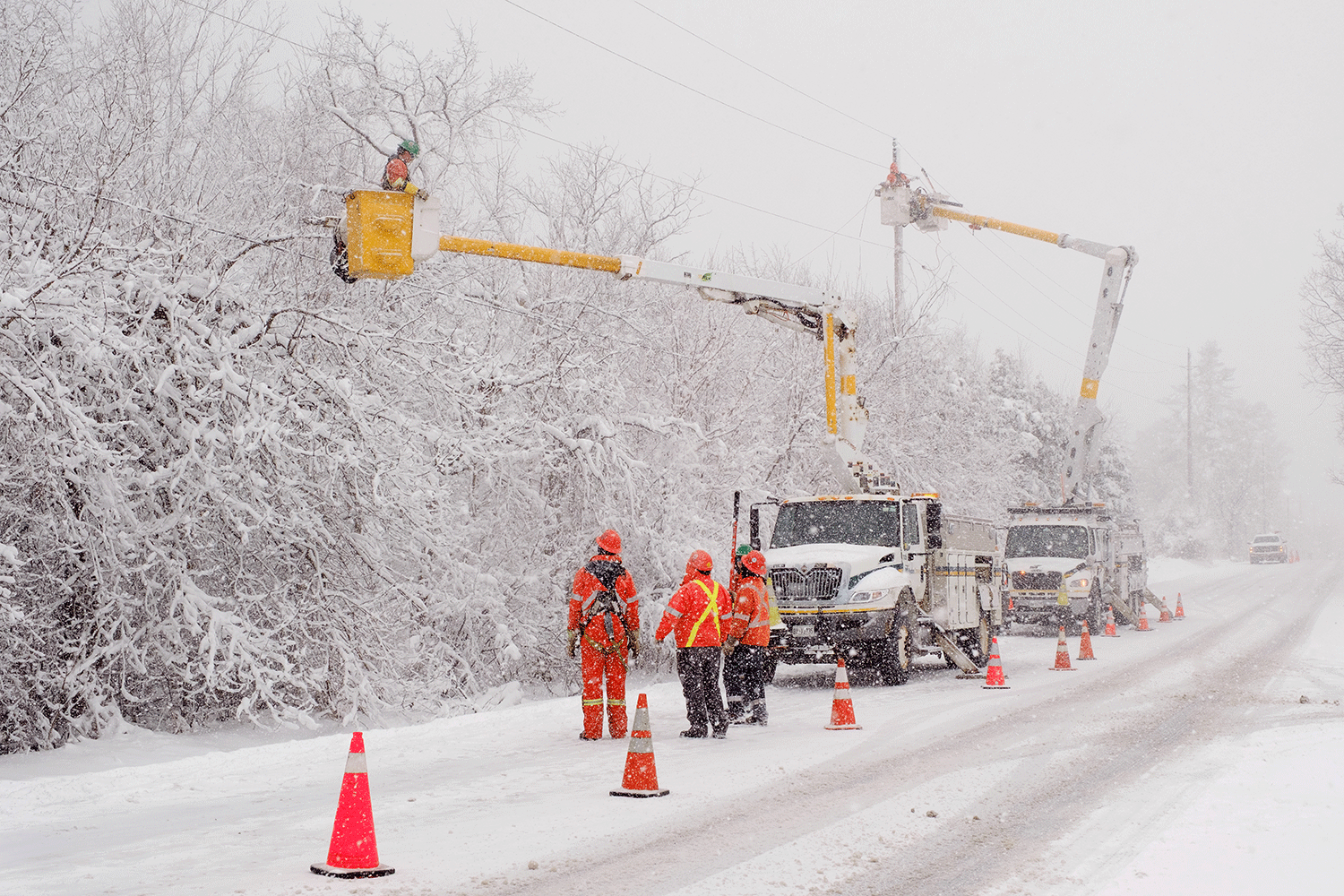
[Image caption: Whatever the weather, our crews work around the clock to help keep the lights on.]
Despite our best efforts, unfortunately outages still occur. Equipment fails, poles are knocked down, and wildlife interferes with infrastructure. As extreme weather becomes more frequent, these risks continue to grow, but so do our efforts to strengthen the grid and enhance its resilience.
With every outage comes an opportunity for us to learn and improve. Could it have been prevented? What could we have done differently? How can we better prepare our customers to be ready? Answering these questions and listening to what our customers have to say helps us to identify opportunities for improvement and serve our customers better.
Learning from the past and investing for tomorrow
If there’s one thing we’ve learned, it’s that the Ottawa region is no stranger to extreme weather.
“We’ve seen a number of very impactful weather events over the last few years,” said Guillaume Paradis, EVP, Distribution, Generation, and COO. “We saw a derecho a couple of years ago, which was by some measure the most impactful storm in the history of our company. And so we know what we plan to withstand has evolved, and we need to reflect that in the decisions we make when we invest in our infrastructure and our systems.”
For us, the 2022 derecho was a humbling turning point. It taught us that the standards of yesterday are no longer sufficient for today’s increasingly severe weather and that we need to adapt. So we updated our standards, focusing on both preventing outages and improving our response to them.
We increased our vegetation management program to prevent branches from contacting power lines during high wind events, using AI to help us efficiently identify areas that pose increased risk. Thanks to this new technology, outages caused by tree-contact have decreased by 44 per cent as of 2024, compared to the two-year average before the derecho.

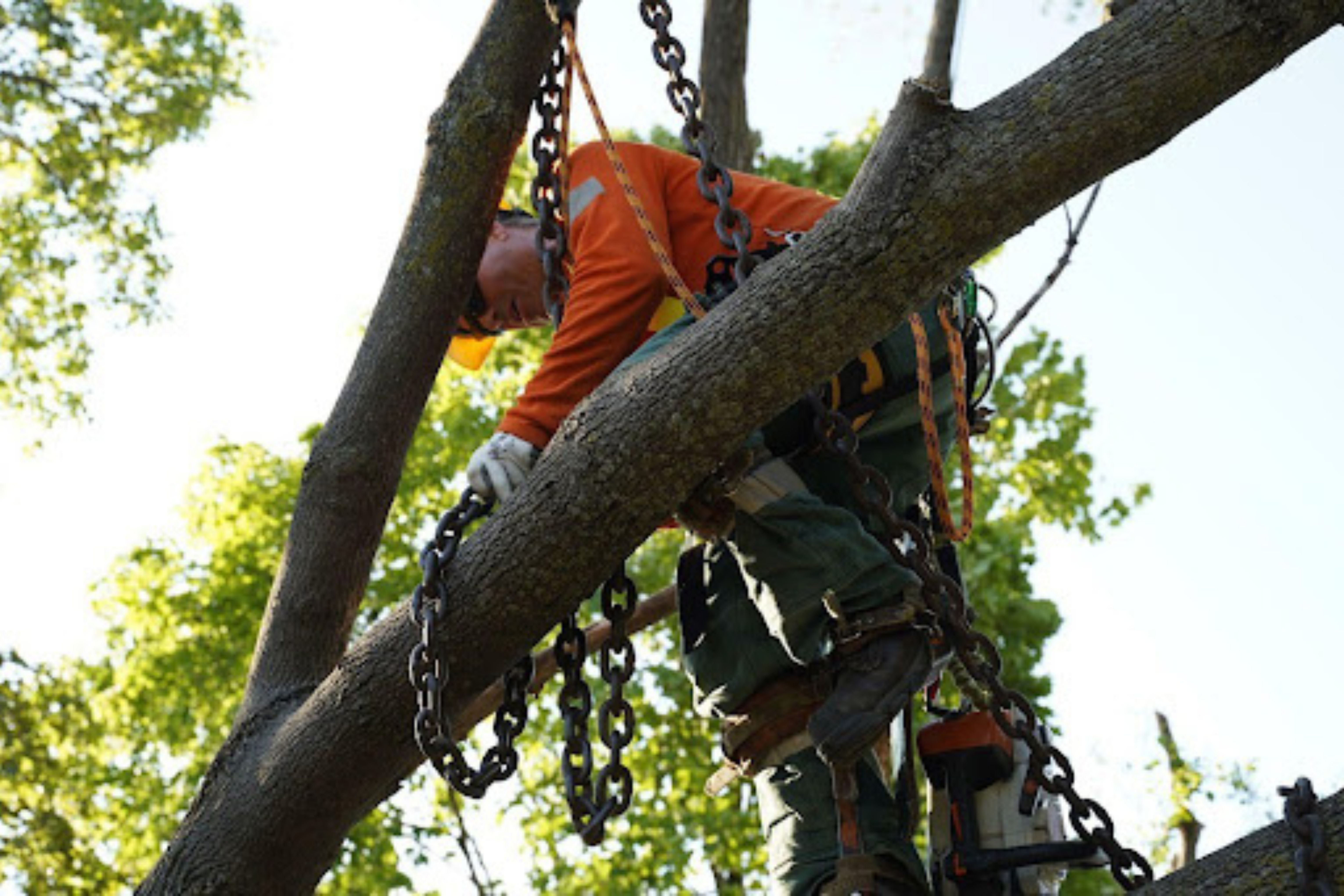
[Image caption: New AI technologies have allowed us to reduce tree-contact outages by 44 per cent.]
We continuously work to identify areas where our infrastructure is most prone to strong winds, helping us prioritize assets that would benefit most from replacement with stronger poles, made of composite or concrete.
We are continuously refining our emergency response plans to enhance our ability to react to future large-scale events. This improvement includes transitioning to an "always-on" emergency preparedness strategy, which ensures the rapid mobilization of our team when a significant event occurs.
Over the next five years, a major focus for us is making the grid “smarter,” so when an outage does occur, we’re quicker to respond. For example, new smart sensors will allow us to quickly and remotely identify the exact location of a grid fault. This means we can dispatch a crew to the exact location of an outage, reducing the effort required to locate the root cause, thereby increasing our restoration speed. Customers should still report outages to help ensure we’re aware of all service interruptions and can respond as quickly as possible.
A lot of work goes into lessening the likelihood of an unplanned outage. But what about planned outages?
Planned outages and grid maintenance
Maintaining our grid is a 24/7, 365-day effort. Planned outages are just one area of maintenance that is often necessary to safely conduct work on the grid to ensure it remains reliable, ultimately preventing longer, unplanned outages in the future.
While these outages help address immediate and future planning needs, they are only one part of our broader strategy. To stay ahead of our city’s growth and the challenges of increasingly severe weather, we are also making significant, long-term investments in replacing and modernizing our most critical infrastructure.
We recognize that this essential work, whether for routine maintenance or long-term upgrades, may require a temporary planned outage. We understand that being without power is disruptive. That’s why when we schedule an outage, we make every effort to ensure customers know about it so they can plan accordingly.
We use multiple channels to notify impacted customers, including phone calls, emails, and text messages. To stay informed, we encourage our customers to regularly ensure their contact information is up to date to receive these alerts. Information can be updated easily through MyAccount.
Even with the best preparation, sometimes plans change. Factors like extreme weather, safety concerns, and supply chain issues can impact our schedule. At the end of the day, safety is paramount. If a project must be postponed, we prioritize rescheduling it for the next safe window and will provide impacted customers with updated notifications.
A risk-based approach to infrastructure
When you look around our service territory, you may notice that certain areas appear to have older infrastructure than others. In fact, large portions of our grid, including many poles and transformers, are more than 40 years old.
While we’d like to replace all of our older assets to support higher reliability, unfortunately, it isn’t possible. This would not be cost-effective, and the impact on customers would be too great. But just because an asset has been around for a while, doesn’t mean it isn’t working perfectly fine.
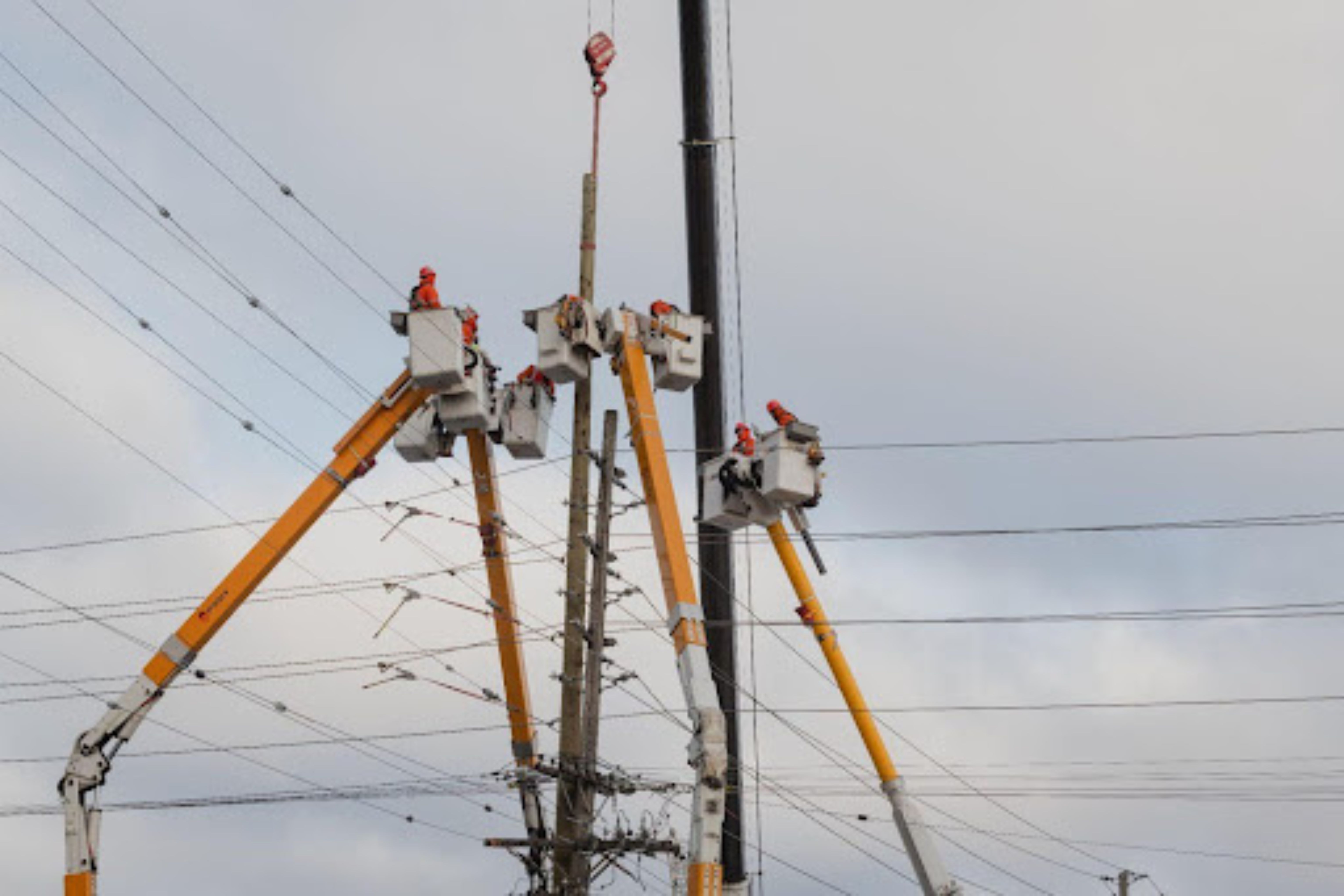
[Image caption: We prioritize replacing the assets that pose the greatest risk to safety and grid reliability.]
In addition to maintenance, we run a thorough testing and inspection program that allows us to continuously assess which assets need replacement and which ones can wait, prioritizing those that present the highest risk to service reliability, safety, and the environment. Our tests evaluate an asset’s overall condition and expected remaining life to determine its overall risk score. If an asset poses a high risk of failure and is likely to have a considerable impact on the grid, replacing that asset takes priority over those that would have a lesser impact.
Building a stronger, more resilient grid - together
As your local utility and neighbour for more than a century, we are dedicated to providing you with reliable energy that supports your daily needs at the service level you expect. We know we maintain your trust by consistent performance—one light switch at a time.
Our team works hard every day to ensure the electricity you depend on is available across our extensive 1,100 square kilometre service area.
We remain committed to collaborating with our community as we grow and plan for the future of our grid. To learn more about our ongoing efforts, visit hydroottawa.com/powertomorrow.