
Top 5 most common causes of power outages in 2025
December 16, 2025
Power outages can be disruptive, but understanding what causes them can make the experience a little less stressful. Each year, we gather detailed information about the outages in our service area. These insights help us plan repairs, make upgrades and prevent similar issues from happening in the future.
Our research also tells us the most common causes of outages. In this article, we’ll walk through those causes to help you understand why outages happen and how we restore your power safely.
This year, we’ve seen our fair share of unplanned outages and as we get ready to head into a new year, we’ll count down the top five causes.

5. Loss of supply
Loss of supply caused 15 outages this year. But what does that mean exactly? To define it, we first have to examine Ontario’s electricity system, which we can split into three phases: generation, transmission and distribution.
First, provincial generators like Ontario Power Generation (and private generation companies), produce electricity via various methods such as hydroelectricity, nuclear, solar, etc. Via transmission towers and lines, this electricity is transmitted across the province by organizations like Hydro One Networks Inc. (Hydro One), the largest power transmission company in Ontario. Hydro One delivers it through their lines to local distributors - that’s us - who then reduce the high-voltage electricity (115,000-230,000 volts) safely through our municipal transformer stations and deliver it to your door at 120-240 volts. Simple enough.
But when those transmission lines go down, a loss of supply occurs, and we can’t send our customers power through our local lines and transformers. Luckily, Hydro One responds quickly to these outages and either reroutes supply or repairs their equipment swiftly. For that reason, loss of supply outages are usually brief.
4. Adverse weather
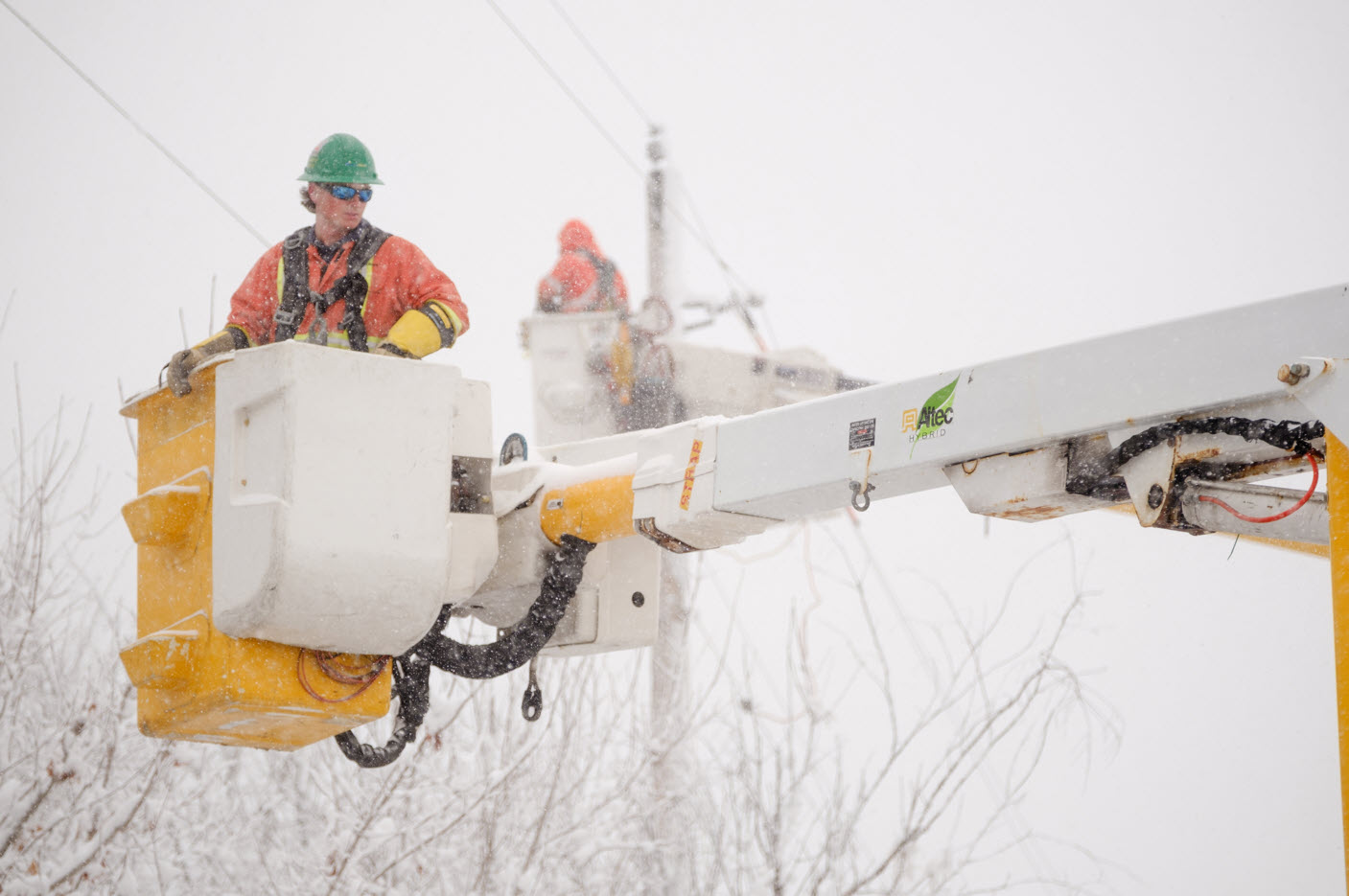
Severe weather can topple hydro poles, snap power lines and trigger widespread outages.
Over the years we’ve seen a growing number of extreme weather events touch down in the National Capital Region. Each one has taught us valuable lessons, helping us update our construction practices, expand our distribution infrastructure and reduce their overall impact on the grid. This year, adverse weather accounted for 52 outages.
3. Tree contact
In 2025, tree contact caused 78 outages. These disruptions typically happen when storms blow branches into wires or when trees fall and break lines.
To keep your connection secure, we trim more than 60,000 trees each year. This lowers the risk of their branches making contact with our equipment.
What’s more, our teams now use infrared technology to monitor the vegetation near our power lines. This lets them find and tag high-risk trees before they show signs of decay, meaning we don’t have to rely on a trimming schedule and can instead target the areas that we know need attention.
We’ve been successful with this new strategy, reducing these kinds of outages by 44 per cent.
2. Equipment failure
This year, equipment failure caused 140 outages. We’re more likely to run into these issues with aging infrastructure or equipment that has reached the end of its service life.
To improve reliability, we’re dedicating an important part of our investment plan to repairing and replacing this infrastructure. On top of that, we’ll continue to inspect our poles for damage from the usual suspects: lightning, termites and woodpeckers.
If you spot damaged equipment, such as leaning poles or frayed wires, let us know. We’ll send one of our crews to the site before there’s an outage.
1. Foreign Interference
Foreign interference is a broad umbrella. It includes the balloons that drift into power lines, the vehicles that crash into poles and the excavations that go wrong. That said, while these things do happen, they account for only a small portion of outages.
The real culprits are a little more… adorable.
Of the 144 power interruptions caused by foreign interference this year, 103 were brought about by squirrels, birds and raccoons.
These animals typically cause outages when they make contact with power lines. But squirrels and raccoons can also climb poles and damage transformers. Fortunately, our electrical substations have breakers that can detect animal contact and control the supply of power accordingly. This may make your lights flicker, but it’ll save you from having to endure a longer interruption.
To help our furry and feathered friends, we take a preventative approach by installing Wildlife Protectors as a means to protect them from harm.
Do you plan outages?
Yes. When we have to trim trees or replace equipment, for example, we’ll schedule an outage in the area.
We’ll review the details of a planned outage carefully. This ensures our crews can work efficiently, and we can keep any inconvenience minimal. We text, call or email impacted customers in advance, and in some cases, we hand-deliver letters that notify them of the interruption.
We’re interested in what you have to say. So during the planning of our major investment projects, we host public information sessions. These meetings give you a chance to voice your concerns and learn more about our work. The outages we schedule for these major projects can happen over weeks or months, but they’re essential to provide you with safe and reliable service.
What should I do if there’s an outage?
- Report it: Text “OUT” to PWROUT (797688), call our 24/7 outage line at 613-738-0188, use the Hydro Ottawa app or let us know through our website.
- Check the map: Take a look at our outage map. It’ll display the interruptions in your area.
- Stay informed: Sign up for real-time outage alerts, and follow us on social media. That way, you’ll know when we respond to an outage. You’ll also get an estimated time-of-restoration.
To learn more about outages and safety, visit our emergency preparedness page.