
The next wave: Why Canada’s energy future is blue
January 22, 2026
Beyond solar and wind, marine energy is the next frontier for Canada’s clean energy future. Elisa Obermann, Executive Director at Marine Renewables Canada, explores the promise of 'blue energy' - from emerging technologies to their potential for empowering coastal and Indigenous communities.
What comes to mind when you think about renewable energy generation? For most, it’s solar panels or wind turbines. But what if the next wave of clean energy isn’t found on land?
With the longest coastline in the world and thousands of rivers, Canada could be home to the next big thing in renewables. By harnessing the predictable power of waves, river currents and tides, Canada is tapping into the emerging world of marine renewable energy (MRE), a constant and highly predictable energy source.
In a recent ThinkEnergy podcast, host Trevor Freeman sat down with Elisa Obermann, Executive Director of Marine Renewables Canada, to find out how “blue energy” technologies are making a splash in the renewable energy scene.
But first, a (brief) lesson in electricity generation
Most of the electricity we use is generated using a simple principle: spinning a magnet inside a coil of wire to move electrons, creating a current – called electricity. Whether that be using nuclear fission to create steam to spin turbines or wind to turn a blade, most methods of generating electricity are simply different ways of making a magnet spin.
However, as Obermann notes, “We know we’re going to need more electricity. We can’t put all of our eggs in one basket. We need energy diversity.” And that’s where MRE comes into play.
The big four in marine renewable energy
There are four main sources of MRE that Marine Renewables Canada focuses on: tidal energy, wave energy, river current energy, and offshore wind energy. But what do each of these look like?
Obermann explained tidal energy technology as looking similar to a land-based wind turbine, but underwater. These turbines can harness the strong kinetic energy that tides produce when they flow in and out, creating a consistent and dependable source of energy.
One of the benefits of tidal technology is that it can be installed incrementally and easily moved – something that can’t be said about dams, for example. This ease of mobility is a major “pro” for tidal technologies as it allows for easier turbine maintenance and quick removal if concerns about its installation location emerge.

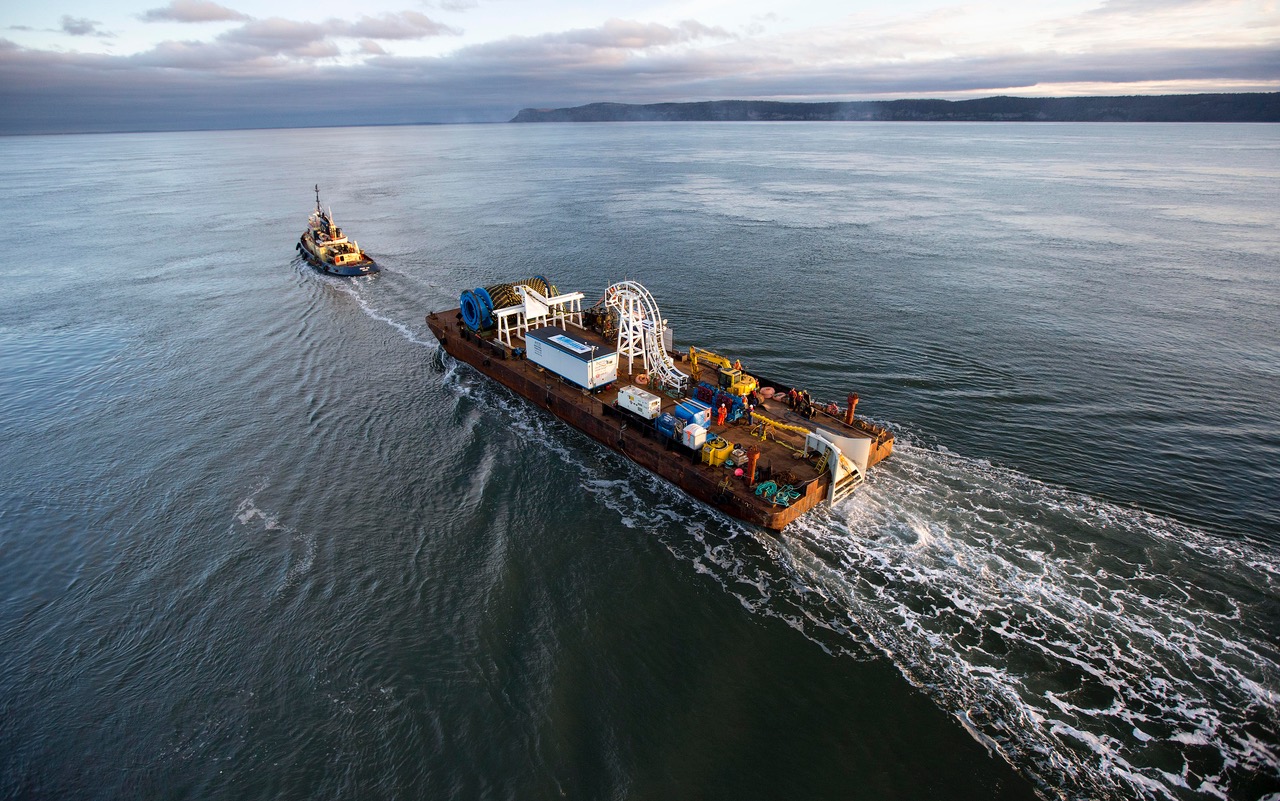
[Image caption: Fundy Ocean Research Centre for Energy (FORCE) prepares to lay a 2 km subsea power cable in the Minas Passage, building the foundation for the world’s largest tidal power transmission capacity.]
River current technologies are similar to the underwater turbines being used for generating tidal energy, but with one key difference – river current turbines are unidirectional. The continuous flow of water downstream in a river makes for an extremely reliable generation source, and they can even be installed on existing infrastructure around rivers to bring big cost savings.
While still in the earlier stages of development, wave energy is another big focus for Marine Renewables Canada, with a variety of concepts being considered. One of these technologies is a buoy-type device that captures the energy generated from the height of the wave passing through a chamber. As the wave rises, it forces air out of the chamber, spinning a turbine and creating energy.
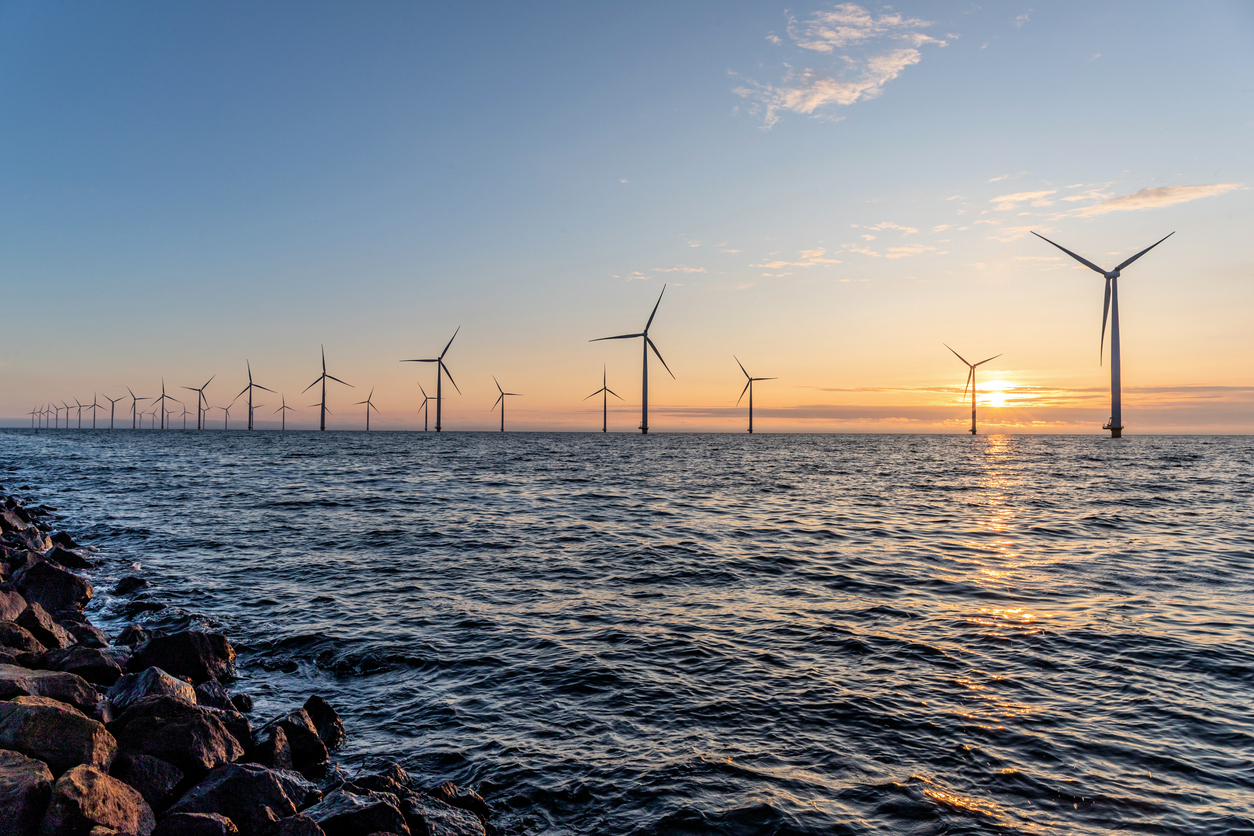
Offshore wind technologies are one of the more mature pieces of generation tech. Simply put, they’re the same windmills used on land, just installed in the ocean. The benefit of harnessing the power of offshore winds is that wind speeds tend to be faster and steadier, which makes a significant impact on generation. For example, a turbine in a 20km/h wind generates twice as much energy as the same turbine in a 15km/h wind.

There’s lots of work and research being put into the marine renewable energy space. But with proven renewables such as wind and solar, why should the energy industry be looking at these technologies?
Why marine energy? Predictability = reliability
While solar and wind generation are foundational to many clean energy mixes, their output fluctuates with weather patterns. This can lead to gaps in generation when the sun isn't shining or the wind isn't blowing. One major strength of marine renewable energy, however, is its predictability and consistency. Unlike solar and wind, tidal energy can be predicted years in advance. Even wave energy is also more than twice as predictable as wind and solar.
“We know when the tides are going to come in and out,” said Obermann. “We can schedule that for energy system planning. We would even know 100 years from now, when exactly the tide is going out and when it will be at its peak.”
With such high levels of reliable generation, marine renewable energy ensures that Canada doesn’t become overly reliant on a single source of energy, in turn helping to stabilize energy supply and prices.
When looking at the generation potential for marine renewable energy, the numbers are significant. “Canada has 40,000 megawatts of potential tidal energy, and that’s looking at the best locations,” says Obermann. “It’s technical potential, but it’s also looking at feasibility in terms of locations and what is close to grids.”
To put that into perspective, that’s enough clean energy to remove over 113 million tonnes of CO2, or take over 24 million cars off the road.
The immense generation potential mentioned by Obermann is of particular interest for Canada’s North and coastal regions. For many remote and Indigenous communities, the predictability of the ocean can provide a much needed energy alternative.
A carbon-free alternative for remote communities
With over 280 remote communities (the majority being Indigenous) running off of local fossil fuel plants, marine renewable energy has the potential to offer remote communities a cost-competitive and emissions-free generation alternative.
“In the case of northern, remote, coastal, and indigenous communities, there's a potential to displace diesel,” says Obermann. “There's been some studies around this showing that it would actually be at a lower cost than the diesel fuel that they're using in those communities.”
Dive deeper
Whether it’s the predictable rhythm of the tides or the untapped force of our northern rivers, the future of Canadian energy is looking increasingly blue.
To learn more about the innovations happening beneath the surface, listen to the full interview with Elisa Obermann on the ThinkEnergy podcast, available on our website or wherever you get your podcasts.